Ocean living is no longer a vacation fantasy reserved for a week-long cruise — it is becoming a genuine housing category. A new wave of companies is letting buyers purchase a cabin on a cruise ship and use it as a permanent address rather than a holiday cabin. At the front of this movement is Avora, whose flagship brand, Avora Residences, is converting a classic ocean liner into a community of private, deeded homes that sail the globe year-round. This article looks at what ocean living actually means today, how Avora Residences works, and what prospective owners should know before considering a cabin on a cruise ship as their next home.

What Is Ocean Living, Really?
Ocean living describes a lifestyle where a person's primary residence is a ship rather than a fixed address on land. Instead of owning an apartment or house, residents own or lease a private suite aboard a vessel that continuously travels the world.
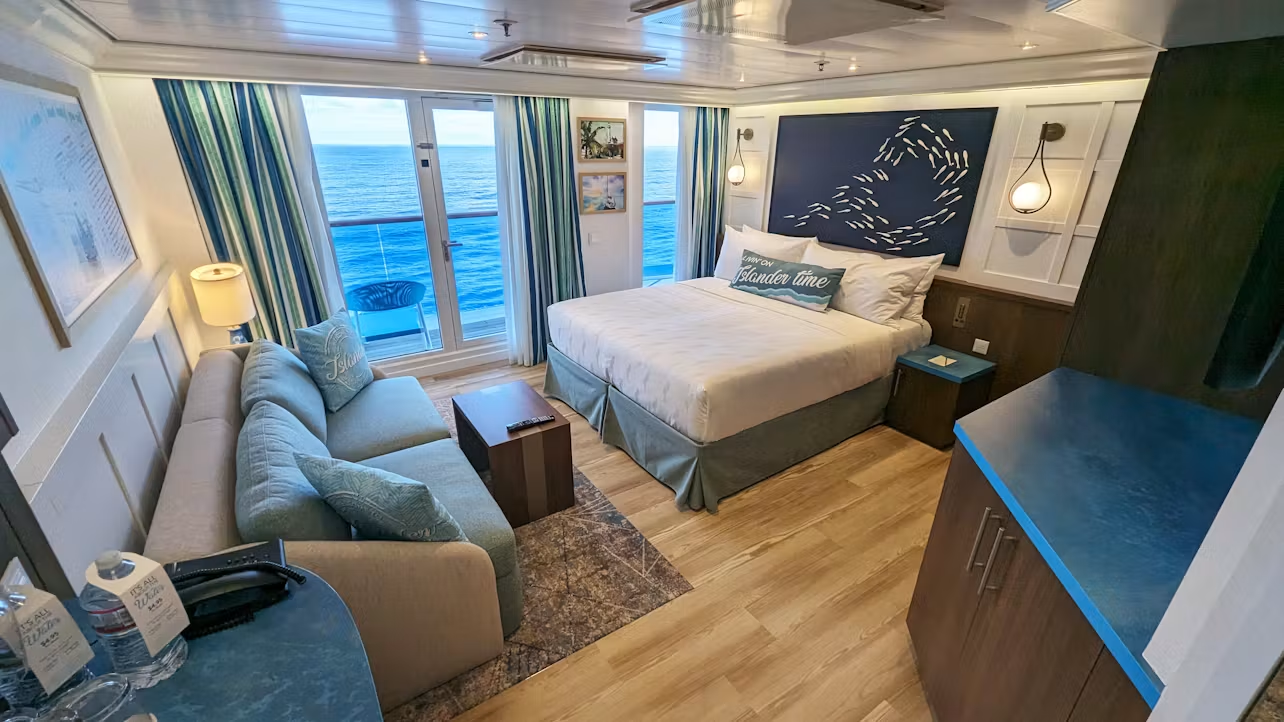
This is different from a typical cruise vacation in three key ways:
Duration – residents live aboard for months or years, not days.
Ownership – residents hold a deed or long-term contract, not a ticket.
Community – residents build ongoing relationships with neighbors, crew, and destinations.
Avora Residences has built its entire model around this distinction, describing its suites as floating homes rather than cruise cabins.
Avora Residences: A New Model for Life at Sea
Avora Residences entered the residential cruising space with the acquisition of a well-regarded luxury ship, previously operated as Regent Seven Seas Cruises' Seven Seas Navigator. The vessel has been renamed and is undergoing a full residential conversion ahead of its planned 2028 debut.
Rather than disrupting the ship's proven operational history, Avora has chosen to preserve its established crew, systems, and service standards while reworking common areas and suites for long-term living. The goal is a ship that feels like a neighborhood at sea, not a hotel corridor.
Founders describe the approach as evolution rather than reinvention, aiming to combine decades of maritime reliability with a genuinely residential day-to-day experience.
How to Buy a Cabin on a Cruise Ship Through Avora
For readers wondering how to buy a cabin on a cruise ship, Avora Residences offers two general ownership paths:

Life-of-Ship Ownership – a deeded purchase that gives buyers a residence for the operational lifetime of the vessel.
Term Ownership Program – a fixed multi-year commitment offering residential access at a lower entry cost than full ownership.
Suite sizes across the ship range from roughly 300 to over 1,100 square feet, spanning several categories from compact studios to expansive multi-room residences. Each suite is designed with premium finishes, private balconies, and personalization options, positioning them closer to a small apartment than a standard ship cabin.
Because pricing spans a wide range, from suites priced similarly to a starter home up to multimillion-dollar residences, Avora Residences is positioning ocean living as an alternative to traditional homeownership in major global cities rather than a luxury add-on.
Daily Life Aboard an Avora Residence
Choosing ocean living through Avora Residences means daily routines built around both community and travel. The itinerary is designed for depth rather than speed, with extended port stays of up to several days allowing residents to genuinely explore each destination instead of rushing back to the ship.
Planned amenities and services focus on everyday comfort rather than short-term entertainment:
Rotating, destination-inspired dining concepts with seasonal menus
Wellness and fitness spaces designed for regular, not occasional, use
A dedicated business and connectivity center for remote work
Reimagined common areas built for long-term social life, not one-week itineraries
This structure appeals to a specific audience: globally mobile professionals, retirees, and entrepreneurs who want a home base that moves with them.
Why Buyers Are Choosing a Cabin on a Cruise Ship Over Traditional Real Estate
Interest in buying a cabin on a cruise ship is part of a larger shift in how people think about property. Several factors are driving this trend:
Global mobility – one residence provides access to dozens of countries without separate travel planning.
Simplified ownership – maintenance, staffing, and upkeep are handled by the ship's operator.
Built-in community – residents share a small, consistent social circle across years of travel.
Diversification – a maritime residence can sit alongside land-based property as part of a broader portfolio.
Avora Residences leans into this positioning directly, comparing its pricing structure to home values in major global cities rather than to typical cruise fares.
Avora Residences and the Broader Residential Cruising Trend
Avora Residences is not operating in isolation. The residential cruise segment has grown as older luxury ships find second lives through conversion rather than retirement, and as buyers increasingly favor flexible, experience-driven ownership models over static property.
Avora has also formed partnerships within the broader residential-living space, aiming to connect land-based luxury residences with ocean-based ones for buyers who want both options available under a related brand umbrella.
This positions Avora Residences as part of a wider redefinition of what "home" can mean — one where ocean living sits alongside traditional real estate as a legitimate long-term choice.
What to Consider Before Buying Into Ocean Living
Before committing to a cabin on a cruise ship, prospective buyers should think through a few practical points:
Confirm the launch timeline – conversions like Avora's take years; understand what stage the project is in.
Review ownership terms carefully – deeded versus term ownership carries different long-term implications.
Understand resale and exit options – ask how ownership can be transferred or sold in the future.
Evaluate connectivity and remote-work support – important for anyone planning to work while living aboard.
Visit or research the ship's history – a vessel's operational track record matters for long-term reliability.
Ocean living is an appealing concept, but like any major property decision, it rewards careful due diligence.
Conclusion
Ocean living has moved from a niche curiosity to a credible alternative housing model, and Avora Residences is one of the clearest examples of where the trend is heading. By combining a proven ship, flexible ownership structures, and a genuinely residential day-to-day experience, Avora Residences is showing what it looks like to buy a cabin on a cruise ship and turn it into a real, permanent home. For buyers drawn to mobility, community, and a different relationship with the idea of "home," Avora Residences offers a compelling — and increasingly serious — option worth researching further.
FAQs
1. What is Avora Residences? Avora Residences is a company converting a classic luxury cruise ship into a residential vessel, offering private, deeded or long-term suites for buyers who want to live at sea full time rather than take a short vacation cruise.
2. How is ocean living different from a regular cruise? Ocean living involves owning or leasing a residence aboard a ship for months or years, with a stable community and personalized suite, whereas a regular cruise is a short-term vacation booked for a set number of days.
3. Can you really buy a cabin on a cruise ship? Yes. Companies like Avora Residences sell or lease private suites through deeded ownership or fixed-term programs, functioning similarly to purchasing real estate rather than booking a ticket.
4. What ownership options does Avora Residences offer? Avora Residences offers two main paths: Life-of-Ship Ownership, a deeded purchase for the vessel's operational lifetime, and a Term Ownership Program, offering residential access over a set number of years at a lower entry price.
5. How large are the residences aboard an Avora ship? Suite sizes range from roughly 300 square feet for compact studios up to over 1,100 square feet for larger multi-room residences, spread across several distinct suite categories.
6. When does Avora's first residential ship launch? Avora Residences has planned its inaugural voyage for January 2028, departing from Lisbon, Portugal, on an extended global itinerary.
7. Who is ocean living best suited for? Ocean living tends to suit globally mobile professionals, retirees, and entrepreneurs who want a permanent home that includes travel, community, and simplified property management.
8. Is buying a residence at sea a good investment compared to land-based real estate? It depends on individual goals. Ocean living offers mobility and lifestyle benefits that traditional real estate cannot, but buyers should weigh resale terms, ownership structure, and long-term costs just as carefully as any property purchase.
Write a comment ...